Skip to Main Content
Main Menu
Individual Rights Manager

Keep up with data subject requests effortlessly

Automate the work behind data subject requests with a system built for privacy teams. TrustArc helps you intake requests, verify identity, route work to the right people, coordinate fulfillment across connected systems, and maintain a clear audit trail. The result is a more consistent way to manage individual rights requests as privacy obligations grow across jurisdictions.

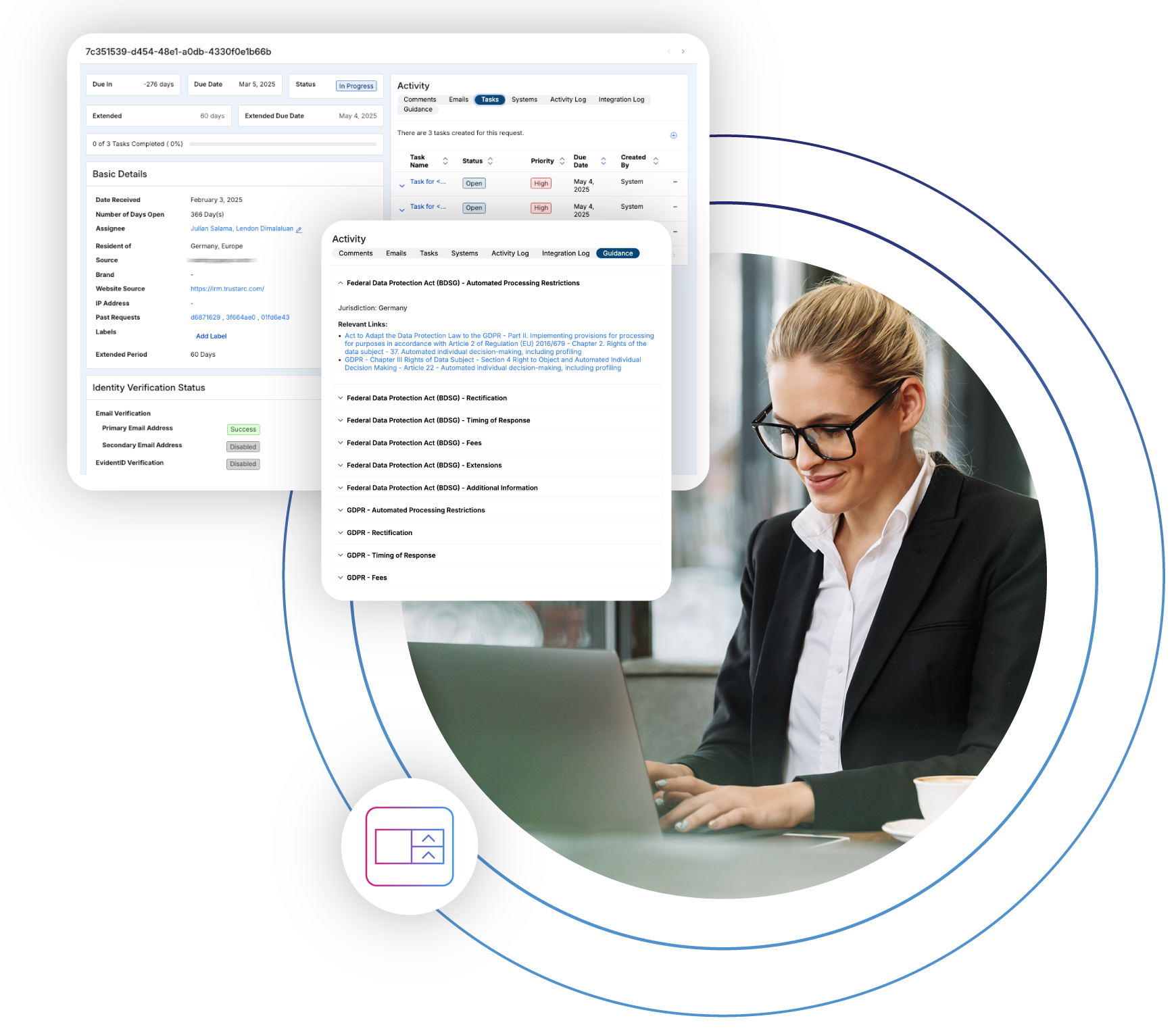
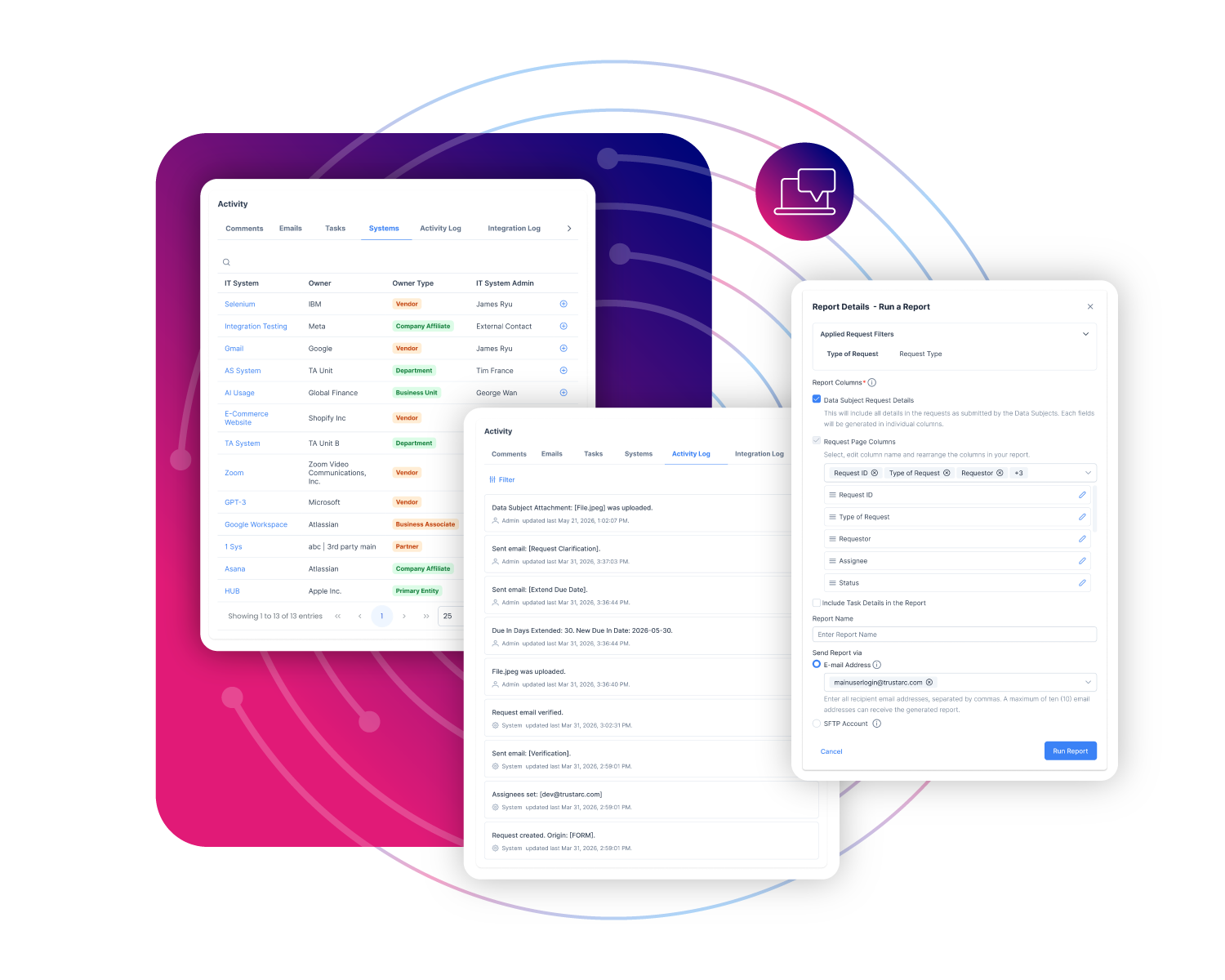
TrustArc Individual Rights Manager dashboard showing automated data subject request workflows, request tracking, and DSR automation analytics for privacy compliance.

Automated DSR workflows

Data complexity and volume only grow, and your DSR solution needs to scale with it. TrustArc Individual Rights Manager gives privacy teams a repeatable, automated workflow to intake, verify, review, route, and close requests across web, mobile, and app experiences.

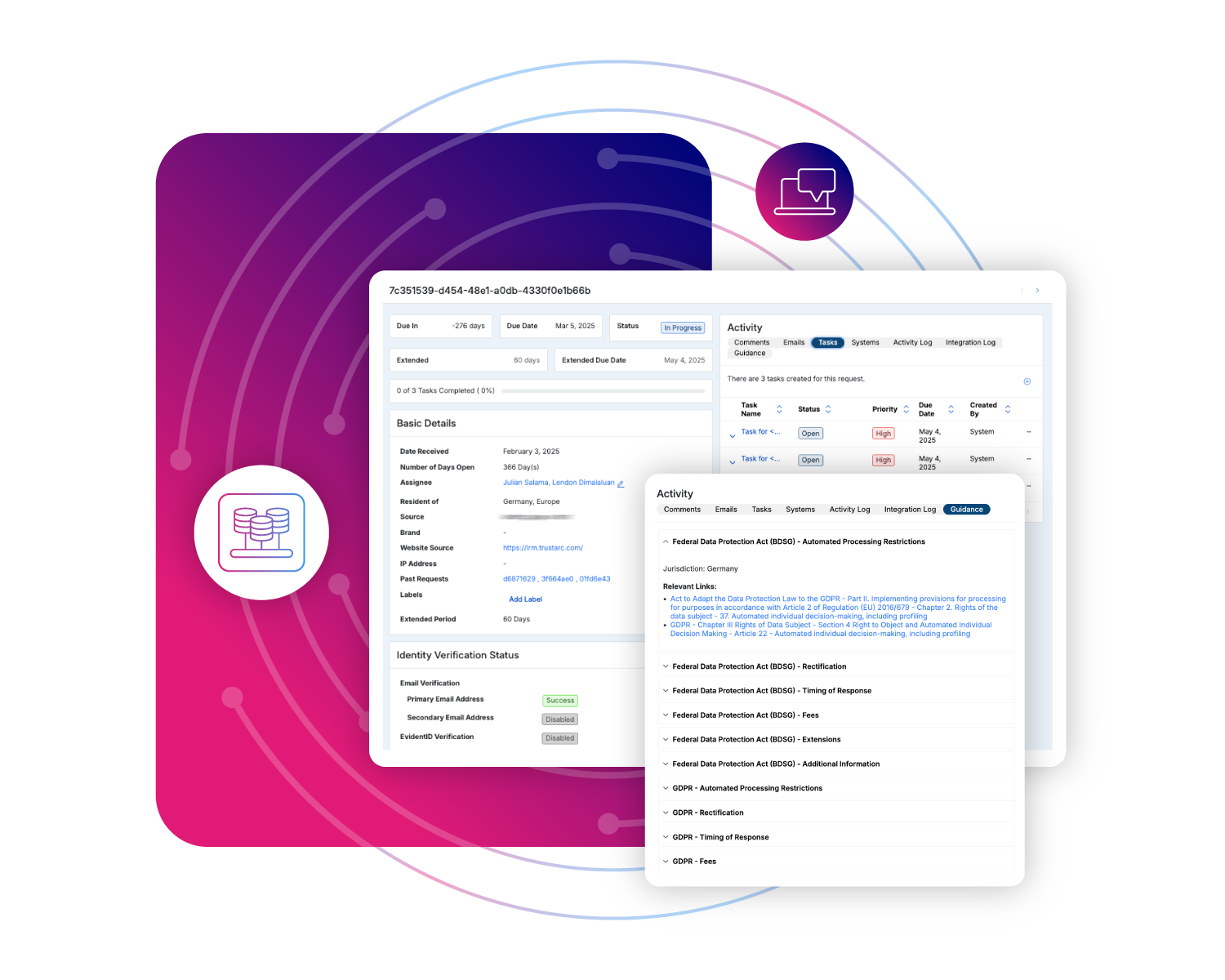
Built-in search makes fulfillment faster as data sprawls, while jurisdiction-based due date tracking and full activity history ensure every request is handled on time and fully auditable.

Scalable DSR software

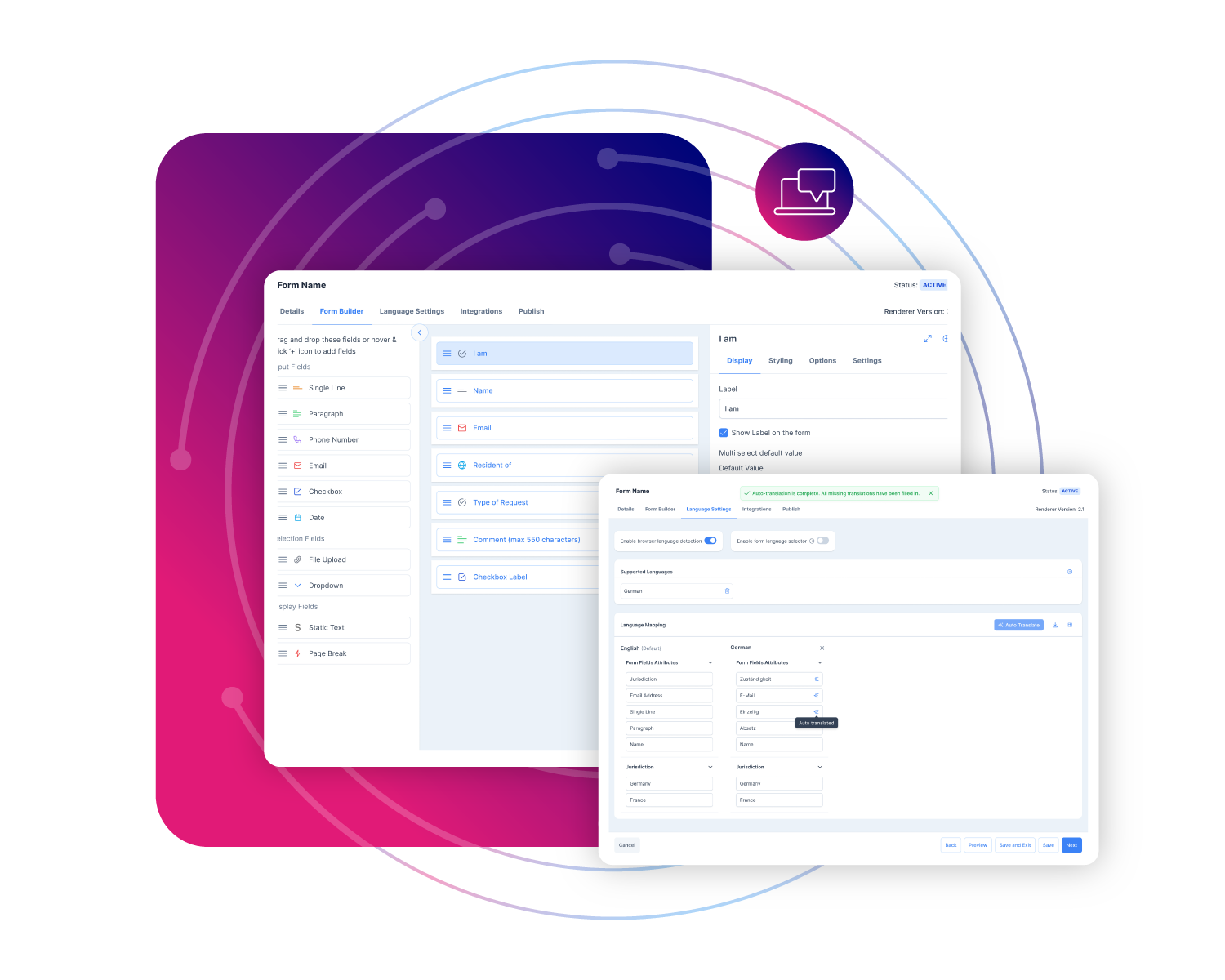
Receive and process data subject rights requests wherever your users are, web, mobile, or app. Logic-based intake templates automatically adapt to local regulations and browser language detection, so the right form reaches the right person without manual configuration. Easily build forms and create conditional logic across your forms.

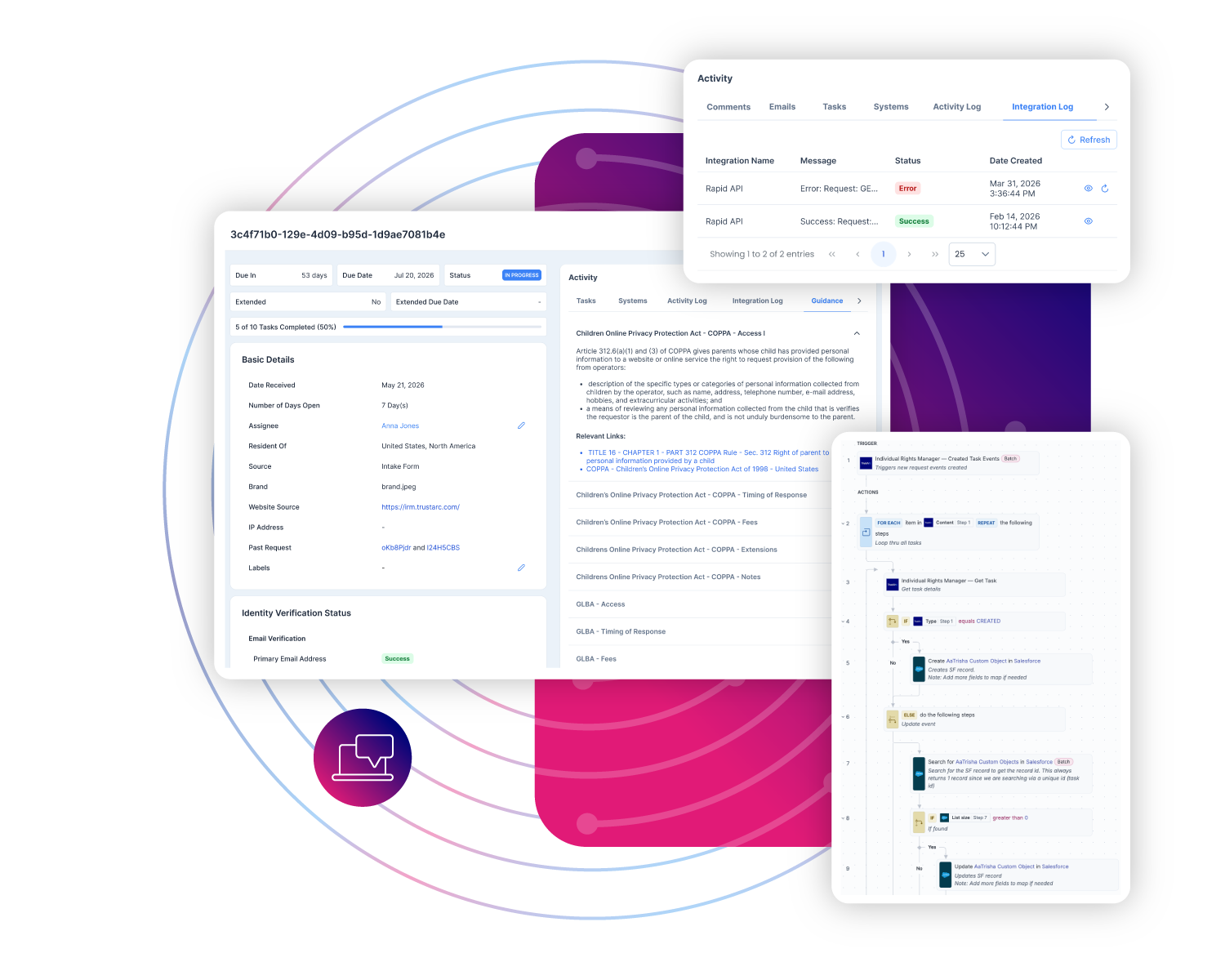
Once a request comes in, TrustArc routes it to the right team member and creates tasks for the appropriate system owners, no manual triage needed. Built-in controls let you configure request handling by user type (customer, employee, partner) and jurisdiction, while connected ticketing workflows, notifications, automated due in dates, and task automation keep fulfillment moving without the manual follow-up. Easily fulfill DSRs with downstream systems with our 300+ no-code integration connectors.

Maintain a clear, defensible record of every request from submission to close. Identity verification, secure communications as well as activity, systems, and integration logs capture how each request was handled, while dashboard reporting surfaces status, aging, and completion trends across your DSR program. PII hashing provides an additional layer of protection for request data throughout the lifecycle.

TrustArc allows my company to seamlessly track and respond to consumer requests for different privacy laws. It also allows for user-friendly templates to be assembled to improve customer experience.

Andrew J., G2 Review

The ability to manage data subject requests in combination with data inventory and risk assessments is key.

Chris S., G2 Review

TrustArc provides hands-on customer support and frequently solicits feedback from its clients. I appreciate being able to reach someone quickly when I have a question.

Daniel J., G2 Review

TrustArc fills the role of the third party where data subjects can go to report any issues with our practices and also keeps us apprised of changes to regulations.

Mike J., G2 Review

    Faster responses, fewer risks

    With TrustArc Individual Rights Manager, what used to be a long, arduous, manual effort to respond to DSRs is a straightforward, automated process—no special expertise or training needed.

    What DSR Automation Handles


    Workflow area What DSR automation helps automate Why it matters
    Request Intake Branded intake forms across web, mobile, and app experiences, with logic-based fields, browser language detection, and configurable notices. Gives Data Subjects a clearer way to submit requests and gives your team cleaner inputs.
    Identity verification Email-based verification and integrated identity checks to confirm requester identity during intake. Ensures the requester is authorized before personal data is disclosed, modified, or deleted, reducing risk and supporting regulatory compliance.
    Routing and tasking Automatic task creation, task hierarchies, routing to the right privacy team member or system owner, and automatic notifications. Cuts handoff time and reduces the follow-up work that slows teams down.
    Timeline management Jurisdiction-based due dates, extensions, reminders, and status visibility. Helps teams stay on top of legal timelines across Jurisdictions.
    Fulfillment across systems Through 300+ integrations, teams can locate data, create tickets, and trigger downstream actions such as opt-out, delete, correct, or update workflows in connected systems. Moves the work closer to the systems where data actually lives.
    Logging and reporting Automatically logged requests, activity history, dashboards, and metrics such as aging and median completion time. Gives privacy teams the record they need for audits, appeals, and regulator questions.
    Data protection Full or partial anonymization rules, role-based access, and options to protect request data. Helps reduce unnecessary exposure of request-related personal data.

    DSR Automation FAQs

    • What is DSR automation?

      DSR automation is software that streamlines how organizations manage data subject requests from intake through resolution. It automates and standardizes steps such as request intake, identity verification, task routing, deadline tracking, requester communication, and audit-ready documentation.

    • What are data subject requests (DSRs)?

      Data subject requests (DSRs) are how individuals exercise their privacy rights under global laws. Common types include the right to access personal data, correct inaccuracies, delete or restrict processing, port data, object to processing, or opt out of certain uses. DSR automation software ensures these requests are captured and processed in line with applicable regulations.

    • How does data subject request software work?

      Data subject request software gives privacy teams a structured workflow to:

      • Receive and centralize requests
      • Verify the requester’s identity
      • Assign tasks to the right teams or system owners
      • Coordinate actions across integrated systems
      • Communicate with the requester
      • Maintain a complete, auditable record of the process
    • Why is DSR automation important for privacy compliance?

      Compliance requires more than just receiving requests. Organizations must verify the requester, respond within legal deadlines, coordinate cross-team actions, and document every step. DSR automation software reduces the risk of missed deadlines or incomplete responses, helping teams meet GDPR, CCPA, and other global privacy requirements.

    • What is an individual rights request?

      An individual rights request is another term for a data subject request. It represents a person exercising their privacy rights, whether it’s accessing, correcting, deleting, or restricting their personal data. Using a centralized solution for these requests ensures consistency across jurisdictions and request types.

    • How does DSR automation reduce risk?

      Automation reduces the operational risk from fragmented workflows, human error, missed deadlines, and insecure handling of sensitive information. It ensures every action is logged, creating a strong audit trail and reducing compliance exposure.

    • What role does identity verification play in DSR fulfillment?

      Identity verification confirms the requester is authorized to access, modify, or delete personal data. Modern DSR automation software supports multiple verification methods such as email-based and integrated verification checks, so organizations can validate identities while maintaining secure, auditable processes.

    • Can DSR automation integrate with multiple systems?

      Yes, and the depth of integration matters. The most effective solutions connect with hundreds of business systems to automate data lookups, ticket creation, consent updates, deadline alerts, and reporting workflows. The broader and deeper the integration library, the less manual work falls back on your team.

    • How does DSR automation improve privacy operations?

      By centralizing intake, standardizing workflows, clarifying ownership, and automating communications, DSR automation creates a repeatable operating model. Teams gain consistent processes, actionable visibility, and a complete record of all request activity, making privacy operations more reliable and auditable.

    • How does DSR automation help organizations scale?

      Automation enables organizations to handle increasing volumes of requests without adding proportional staff. Workflow automation, intelligent routing, automated notifications, and integrated system actions allow privacy teams to scale efficiently while maintaining regulatory compliance and process integrity.

    Back to Top