Skip to Main Content
Main Menu
Consent & Preference Manager

Capture consent and preferences across all channels

Put your customers first with flexible privacy experiences that work across your entire marketing, vendor, and app ecosystem. To get a deeper understanding of the foundational principles of consent and preference management, check out what consent and preference management is and how it works.

Centralized consent & preference management

Ensure compliance and build customer trust with a central hub to track customer preferences across your brands, systems, and digital channels. Collect sync, and process customer privacy choices and first-party data for marketing, mobile, products, ads, and profiling.

Cross-channel consent management

Adhere to evolving privacy laws by clearly documenting user consent for data collection, use, and disclosure, reducing the likelihood of legal issues and fines. Ensure user preferences are logged, stored, and updated in a secure and compliance manner to reduce the likelihood of data breaches and ensure data processing practices align with user expectations and legal requirements. Secure consent storage and real-time syncing ensure your data privacy compliance is always up-to-date.

Customer experience meets privacy compliance

  • Compliant processing of user choices

    Use dynamic intake forms and consent prompts to stay compliant with global privacy laws (e.g. CCPA, GDPR, LGPD, PIPEDA, UK DPA, ePrivacy, GPC, and more). Rely on role-based access and data anonymization/pseudo-anonymization to keep consent data secure.

  • Organization or business entity icon
    Responsive customer experience

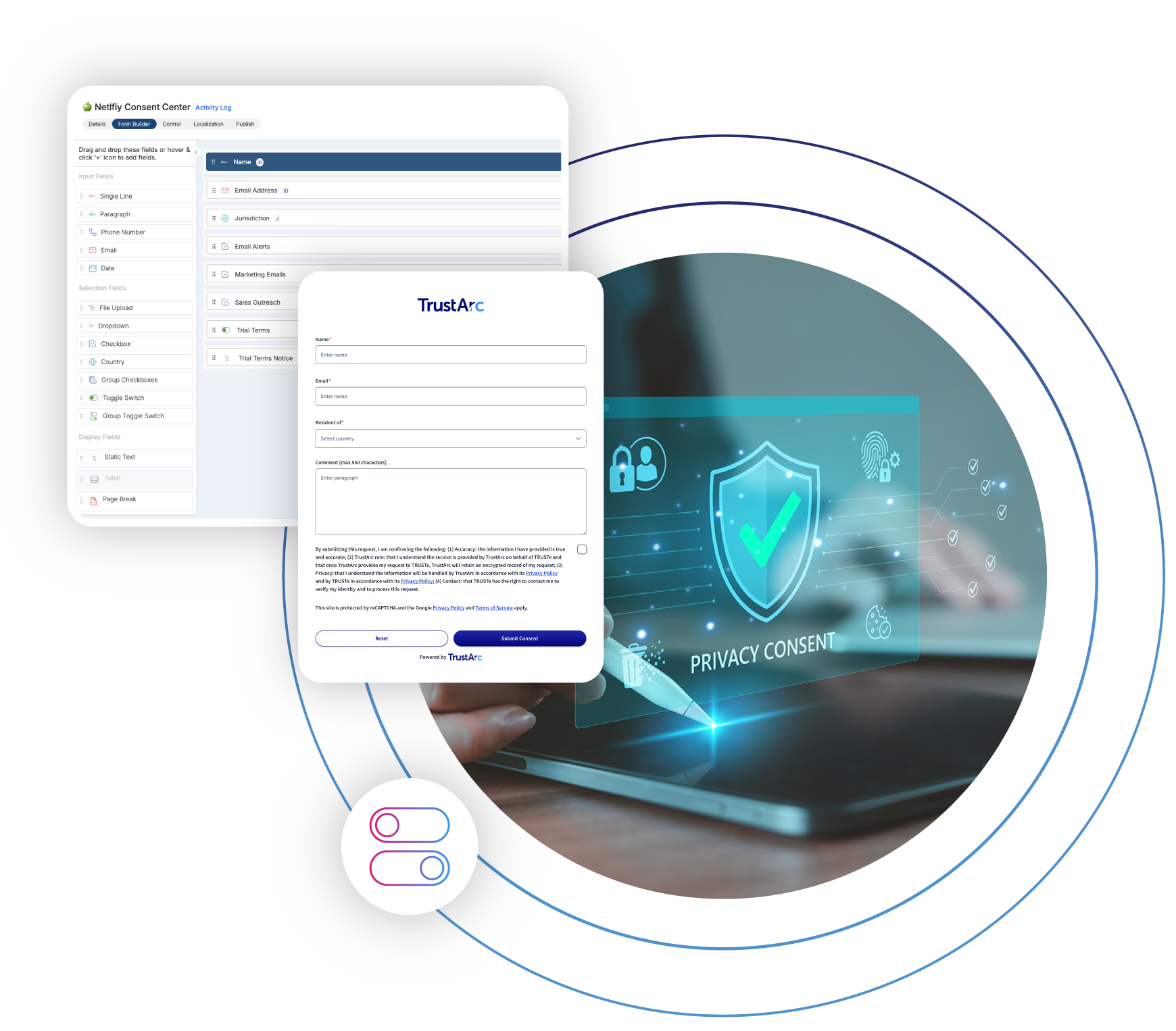
    Personalize forms and prompts to increase opt-ins and build loyalty — experiment with different form options to discover what works best and then follow through with full transparency, including customer access to consent histories. Easily set up and brand with drag-and-drop tools, templates, or your own custom CSS—all with a quick, turnkey implementation.

  • Regulatory compliance and audit trails

    Easily export and share reports, including audit trails for compliance. Track history of consent preferences and overall consent trends in a central location, allowing you to demonstrate ongoing data privacy compliance with regulations.

  • Personalized data subject values

    Use magic links to personalize consent and preference forms for each user and data type, so they don’t need to re-enter their details and can’t submit consents for others.

  • Multilingual and geolocation-based consent and preference management

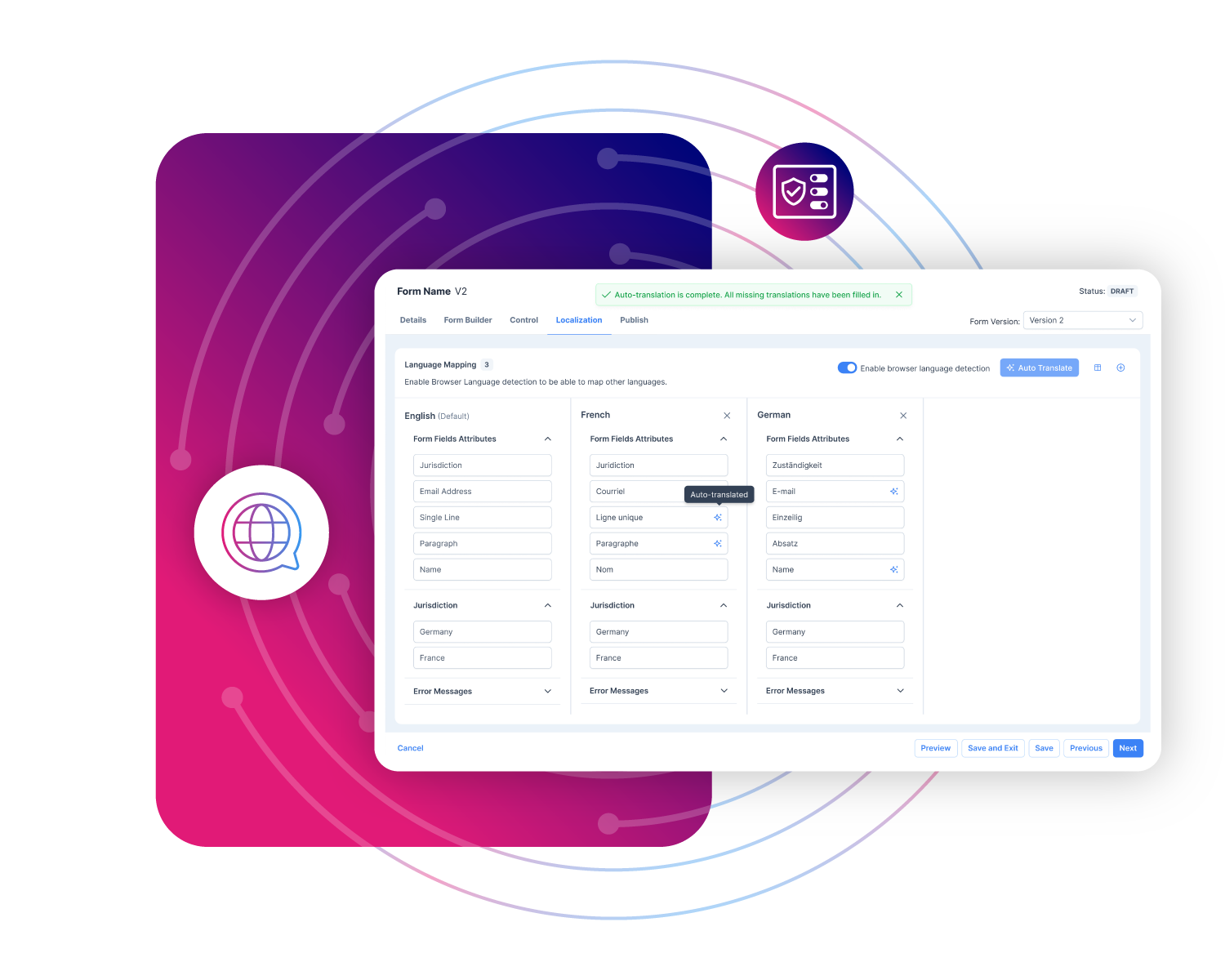
    Support over 60 languages with geolocation-based dynamic consent management banners. Tailor the consent collection process based on user location, ensuring compliance with international data protection laws.

They are experts in privacy and compliance and keep us ahead of the things we don’t have dedicated resources for.

Brian M., G2 Review

TrustArc has a solid platform with strong customer account management, making it easy to manage multiple international domains.

Chris S., G2 Review

TrustArc provides hands-on customer support and frequently solicits feedback from its clients. I appreciate being able to reach someone quickly when I have a question.

Daniel L., G2 Review

I know that with TrustArc, my company will meet legal and regulatory compliance requirements. It is very simple and turn-key to set up.

Arlene G., G2 Review

    Why putting customers first pays off with the right consent management platform

    Honoring customer choices and personalizing your digital and marketing experiences can improve customer trust and build brand loyalty. Improve your customer experience with TrustArc Consent & Preference Manager.

    Privacy Studio Data Collection Purposes


    Consent Consent Manager Consent & Preference Manager Individual Right Manager
    Regulatory requirement Yes Yes Yes
    Primary purpose Capture and manage consent for cookies and trackers — device-level signals that govern how third-party data is collected Capture and manage brand and marketing preferences — zero- and first-party data that powers personalized customer experiences Process opt-outs and fulfill individual rights requests under GDPR, CCPA/CPRA, and other privacy regulations
    End user selection or action • Cookie consent for website traffic and behavioral analytics

    • Tracker consent for Bluetooth beacons, GPS and location services, and other device-level identifiers

    • Preferred channels for email, SMS, and push notifications

    • Topic interests and communication frequency

    • Product and brand preferences

    • Right to access personal data

    • Right to delete or modify personal data

    • Right to opt out of sale, sharing, or specific processing

    Data type governed

    Third-party data Zero-party and first-party data All personal data covered by an individual rights requests / data subject request (DSR)

    Consent & Preference Management FAQs

    Managing customer consent and privacy preferences across modern marketing stacks is a significant operational challenge. Customers interact with brands across websites, mobile apps, email, and advertising platforms. Relevant consent and preference choices need to be captured, documented, and communicated to every system that acts on them.

    TrustArc’s Consent & Preference Manager supports this through configurable consent forms and preference centers, centralized consent history and reporting, and 300+ integration connectors. The questions below explain how consent and preference management works, what key regulations require, and how to build a strategy that scales.

    • What is a consent preference manager?

      A Consent & Preference Manager is a platform that helps organizations collect, store, and manage customer consent and preference choices across configured channels; websites, mobile applications, email, advertising, CRM, and marketing systems.

      It can help coordinate choices about communications, product interests, advertising, profiling, data use, and disclosure, depending on the organization’s configuration and applicable law. Unlike a cookie consent manager, which primarily handles cookies and device-level trackers, a Consent & Preference Manager is designed for broader brand, marketing, zero-party, and first-party preferences.

      TrustArc’s Consent & Preference Manager supports no-code integrations through 300+ connectors, including Salesforce, Marketo, HubSpot, Adobe Experience Platform, and Mailchimp.

    • What is a preference center, and why does a business need one?

      A preference center is a user-facing page where people can view and update their communication and data-use choices, giving individuals more granular control than a one-time consent prompt. For example, someone might choose to receive product emails while declining retargeting or selecting a different communication channel.

      For businesses, a preference center supports more transparent interactions and provides evidence of the preferences an individual selected. Where processing is based on consent, the GDPR requires withdrawal to be as easy as giving it. A preference center can support that requirement, but it does not by itself establish compliance. Notices, consent choices, records, and downstream systems must also be properly configured.

    • What’s the difference between a consent preference manager and a cookie consent manager?

      A Cookie Consent Manager primarily captures and manages choices about cookies, trackers, and other device-level technologies. A Consent & Preference Manager handles broader brand, marketing, zero-party, and first-party preferences across configured channels such as email, SMS, push notifications, and customer preference forms.

      The two products are complementary: a Cookie Consent Manager can cover website and device-level tracking choices, while a Consent & Preference Manager synchronizes communication and customer preferences with CRM, marketing, advertising, and other business systems. Each system must be configured to receive and apply the relevant choice.

    • What is consent orchestration?

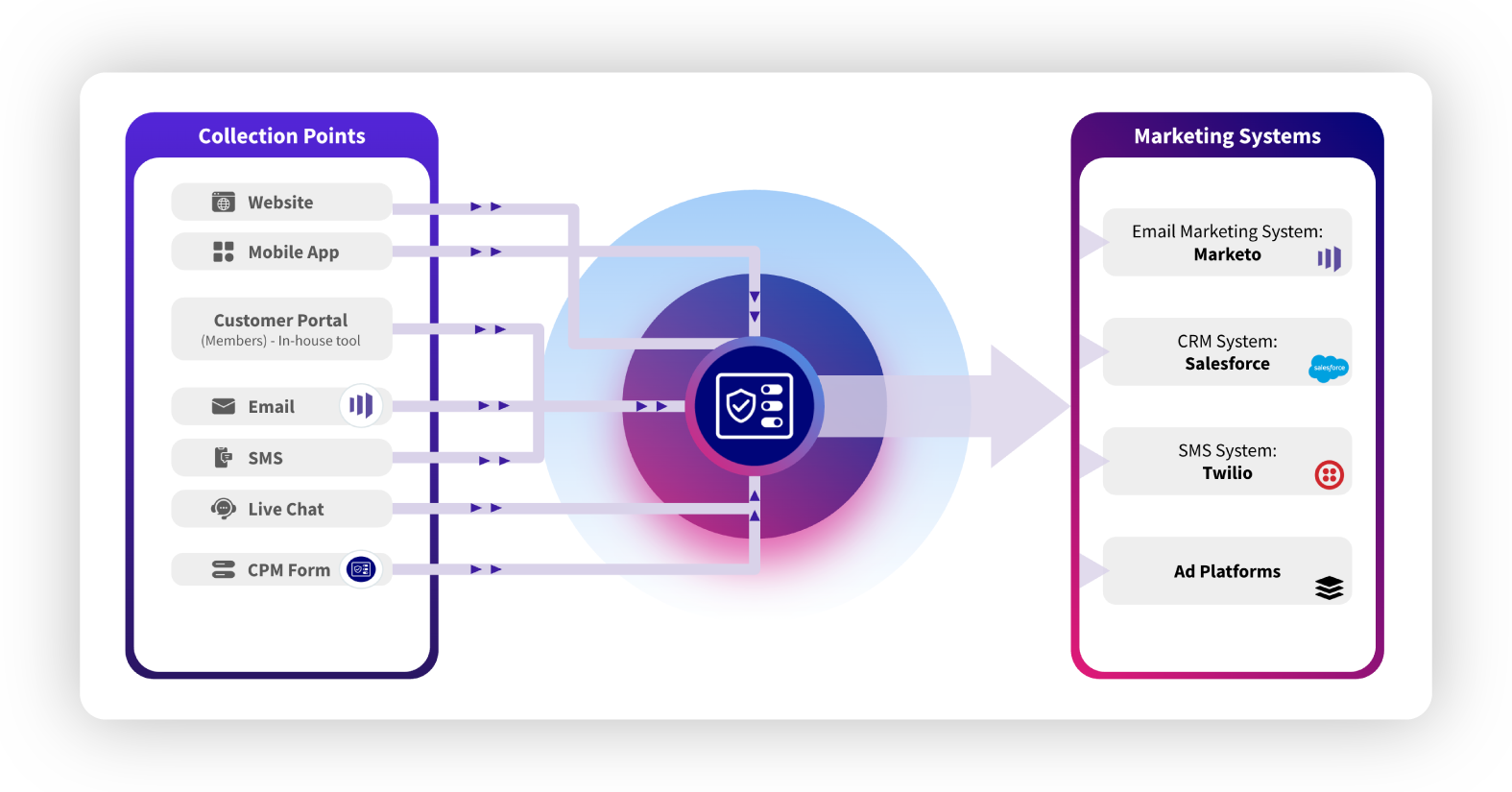
      Consent orchestration is the process of sending a person’s consent and preference changes through configured integrations to the systems that need to act on them; for example, a change made in a preference center being sent to a CRM, email platform, or advertising system.

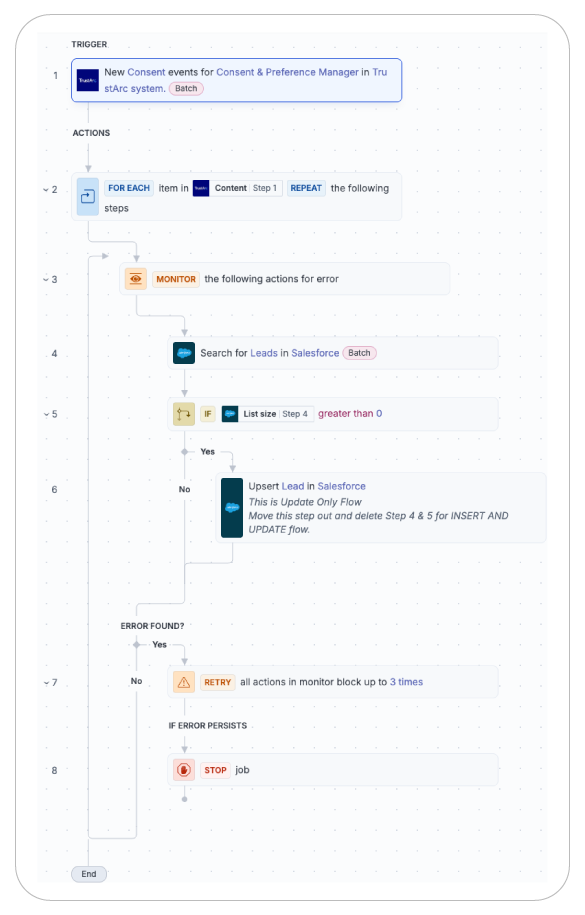
      TrustArc’s Consent & Preference Manager supports no-code integrations and real-time or near-real-time synchronization for supported connectors. Timing, field mappings, identity matching, and downstream enforcement vary by system, and organizations should verify that each destination applies the relevant preference correctly.

    • How does consent sync across marketing and advertising platforms?

      When a person changes a preference, the Consent & Preference Manager can send the mapped update to configured marketing, CRM, advertising, or communication systems. Whether a destination suppresses an email contact, updates a CRM record, removes a person from an advertising audience, or changes tracking behavior depends on the connector, field mapping, destination API, and customer implementation.

      Some integrations support event-driven or real-time updates; others use different processing methods. TrustArc offers 300+ connectors, and available actions, timing, and integration direction differ by connector.

    • Which privacy regulations create a need for consent preference management?

      No privacy law generally requires an organization to use a particular consent-preference platform. However, many laws make it operationally important to collect, document, honor, and update consent, preferences, and opt-outs.

      Under GDPR and UK GDPR, when consent is used as a lawful basis, organizations must demonstrate that valid consent was obtained and that individuals can withdraw it as easily as they gave it. EU ePrivacy laws may separately require consent for non-exempt cookies and certain electronic marketing. California’s CCPA requires covered businesses to honor opt-out preference signals such as Global Privacy Control. LGPD, PIPEDA, and US state privacy laws contain their own requirements. Applicability depends on processing activity, jurisdiction, audience, and implementation.

    • What is first-party data, and how does consent enable it?

      First-party data is information an organization collects directly through its own channels; a website, mobile application, purchase, loyalty program, or direct interaction. Zero-party data is information a person intentionally provides, such as product interests or communication preferences.

      TrustArc’s Consent & Preference Manager can help capture, document, and synchronize choices associated with zero-party and first-party data. However, the source of data does not determine the legal basis for processing. Notice, purpose limitation, consent or opt-out requirements, and downstream platform rules still apply independently.

    • What is a consent audit trail, and when do you need one?

      A consent audit trail records consent or preference events for an individual or identifier, including when the choice was made, the purpose, the collection method, the selected option, the relevant notice or form version, and any later changes or withdrawals.

      Under GDPR and UK GDPR, when an organization relies on consent, it must demonstrate that valid consent was obtained. TrustArc’s Consent & Preference Manager provides consent history, exportable reports, and form-version information to support this evidence. Exact records available depend on the collection channel, configuration, and retention settings.

    • What is a magic link in consent management?

      TrustArc’s Consent & Preference Manager supports tokenized or JWT-based magic links, including customized unsubscribe links in outgoing email. When configured with the appropriate identifiers and preference settings, a magic link can display or pre-populate relevant information without requiring the person to re-enter it.

      Delivery channel, expiration, revocation, and implementation details vary. Magic links should be treated as bearer credentials. Organizations should use secure token settings and avoid exposing unnecessary personal information in URLs.

    • How does consent preference management work for mobile apps?

      Mobile applications require app-specific consent experiences, SDK controls, and operating-system permissions. On iOS, App Tracking Transparency governs tracking across apps and websites owned by other companies and is separate from general privacy consent.

      TrustArc supports mobile consent SDKs, and configured Consent & Preference Manager integrations can synchronize brand and marketing preferences across supported channels. The mobile application must still implement the logic needed to honor those choices. Note that a website preference does not replace App Tracking Transparency authorization, and push notification permission is not by itself consent to receive marketing communications.

    • What is granular consent, and why does it matter?

      Granular consent gives people separate choices for clearly described purposes, channels, or data uses; for example, analytics, marketing, advertising, personalization, or particular communication channels.

      Under GDPR and UK GDPR, consent must be specific, informed, freely given, and unambiguous. Bundling unrelated purposes or making withdrawal difficult can undermine validity. An “Accept All” option may be offered alongside purpose-level choices if purposes are clear and the individual retains a genuine choice. Granular choices can improve transparency and user control; engagement and opt-in results vary by audience, design, and context.

    • How do you build a consent management strategy that scales across jurisdictions?

      Build the strategy around the processing activity and applicable legal scope. Consider the organization’s establishment, targeting or monitoring activities, the individual’s location where relevant, the data and purpose involved, and any sector-specific requirements, not geolocation alone.

      Configure purpose- and channel-specific experiences, including California sale or sharing opt-outs and Global Privacy Control where applicable, and ensure preferences are communicated to the systems that need to honor them. TrustArc’s Consent & Preference Manager supports 60+ languages, geolocation-based experiences, and configurable jurisdiction rules. Customers remain responsible for configuring and updating those rules and for underlying legal analysis.

    • How do I choose the right consent preference management platform?

      Evaluate channel coverage, supported integration directions, connector-specific timing and field mappings, identity handling, failure monitoring, jurisdiction and purpose controls, audit evidence, and preference-center flexibility.

      Confirm which capabilities are included in the relevant product edition and which require implementation work. No-code tools can reduce development effort for supported forms and integrations, but custom integrations, identity matching, mobile SDKs, and downstream enforcement may still require engineering support.

    Back to Top